
For many Americans, access to quality health care depends on something as simple and as significant as geography.
A hospital may be hours away. A specialist may only visit a community a few days each month. A shortage of health care workers can mean longer wait times, fewer services and difficult choices for families already facing challenges.
But across rural communities, researchers, health care leaders, policymakers and innovators are working to change that reality.
To help find solutions to the challenges affecting rural communities across the United States, ORAU convened its first-ever Rural Health Research Innovation Cluster (RIC) Workshop on Aug. 6, 2026.
Cluster is an interesting word, right? In this case, think of a cluster as a grouping of like-minded people and educational institutions coalescing around a specific topic or idea.
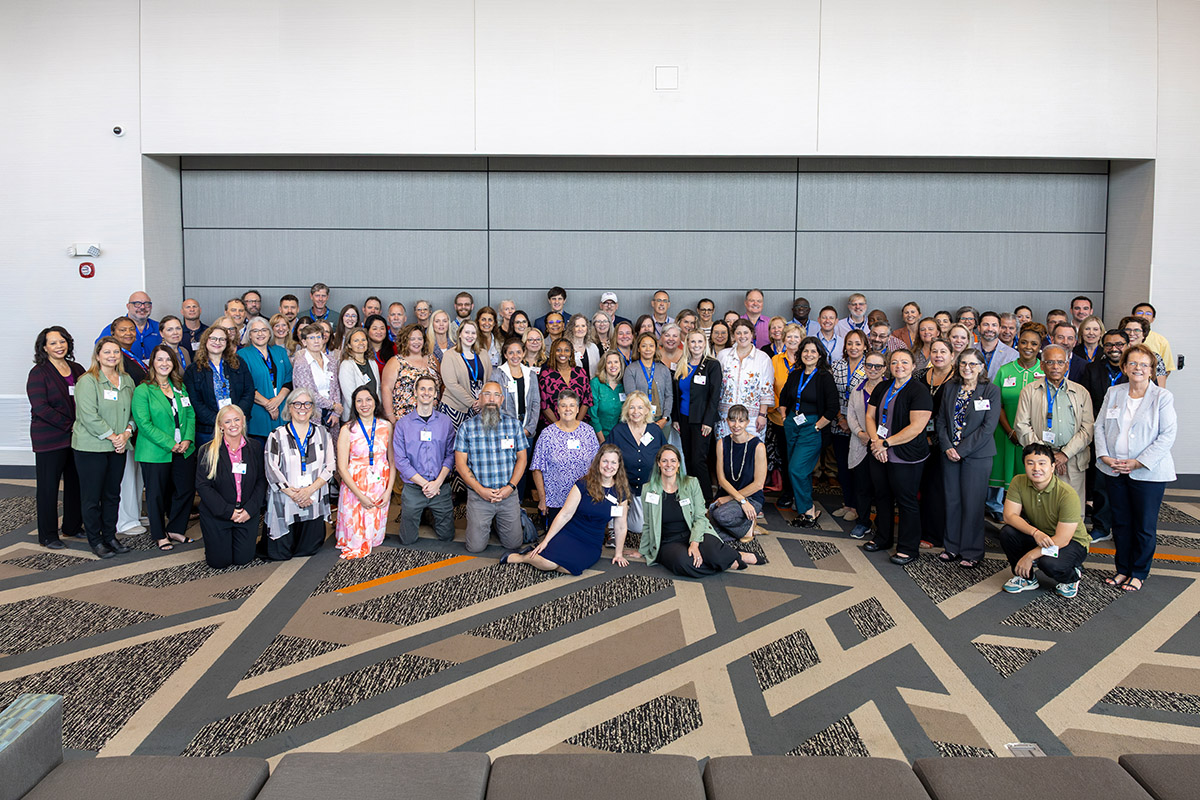
More than 100 people gathered for the first ever Rural Health Research Innovation Cluster Workshop hosted by ORAU on Thursday, Aug. 6, 2026.
The workshop was designed around a simple idea: solving rural health challenges requires collaboration. It provided a space where more than 100 people--representatives from 30 member institutions of ORAU’s University Consortium--shared ideas, sparked collaborations, began building partnerships and explored solutions that have the potential to improve health outcomes.
Discussion and interactive sessions centered on four strategic priority areas: workforce development and retention, women’s health, access to care, and preparedness and resilience. Workshop participants spent the morning individually identifying what they think are important issues and potential solutions, then worked in small groups during the afternoon to find areas of common interest and consensus around the idea of what could be accomplished a one-million-dollar grant.
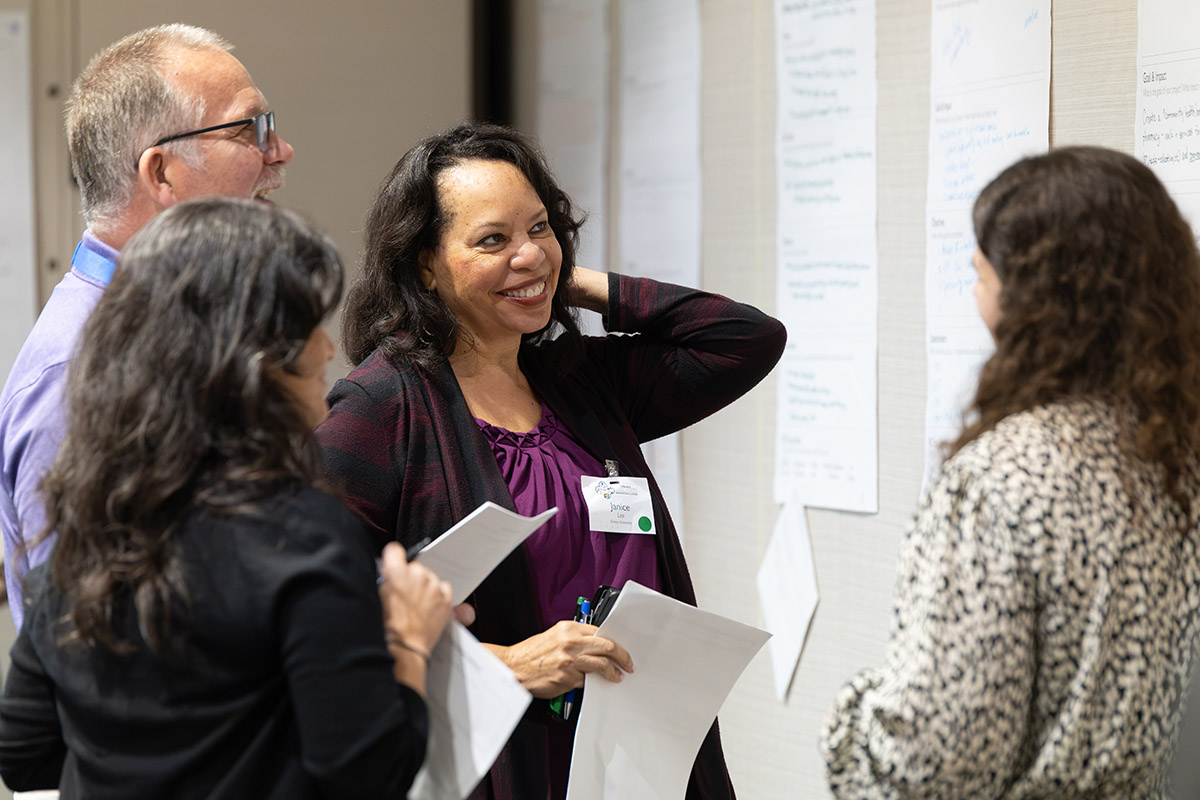
Rural Health Research Innovation Cluster Workshop participants worked in groups around the idea of what they could accomplish if they received a one-million-dollar grant for their community.
By bringing together experts from different disciplines and connecting researchers with communities, the RIC has the potential to identify new approaches to some of the most complex health issues facing rural America.
It’s important to note that the workshop is the very first step in the work of ORAU’s Rural Health RIC, said Casey Thomas, ORAU strategic partnerships and engagement manager. Because ORAU boasts an extensive and engaged University Consortium, it was important to begin the process with members of our elite network of academic institutions.
“Academic institutions play an important role in rural health innovation by serving as research partners, workforce development pipelines, innovation hubs, sources of technical expertise, and connectors between communities and resources,” Thomas said. Universities can help identify emerging challenges, evaluate interventions and train the next generation of health professionals.
Still, Thomas said there was an incredible outpouring of interest from community organizations, health care providers, industry partners and other stakeholders who want to get involved in the RIC’s work. Thomas said, based on the input and data collected during the workshop, next steps could include additional workshops and the development of workgroups and project teams.
“Stay tuned,” she said. “There is so much more to come.”
Connecting the people closest to the challenges
One in five Americans lives in a rural community, and rural communities often face overlapping issues, including shortages of health care professionals, limited access to specialty services, geographic isolation, transportation challenges, aging infrastructure, economic barriers, and increasing demand for chronic disease management and preventive care.
“These challenges are shaped by the unique needs of individual communities,” said Brenda Blunt, ORAU senior director of public health solutions. “Rural health challenges are interconnected and cannot be addressed through a single intervention, which means there is no one-size-fits-all solution to these challenges.”
The complexity of rural health requires collaboration across disciplines, but experts working on rural health challenges often feel a sense of isolation because they don’t know anyone else working on these issues.
Such was the case of Bonnie Spring, Ph.D., Krafft Professor of Behavioral and Social Medicine and director of the Blue Cross Center for Rural Health Research and Policy at Florida State University.
Spring said she has spent much of her career studying chronic disease risk behaviors in urban settings. Since taking on the role as director of the Blue Cross Center at FSU, Spring said she has been fascinated by and drawn to the unique challenges of rural health, particularly because of the lack of research and funding focused on these challenges.
However, Spring felt like an island to herself.
“I am completely isolated, I don’t know other people who do work in that area, so this (the Rural Health RIC workshop) was a chance to find a community and learn what other people are doing, she said.
Rather than working in isolation, RIC participants created connections between educational institutions that may approach rural health from different perspectives but share the same goal. The result is a stronger network focused on turning research into action.
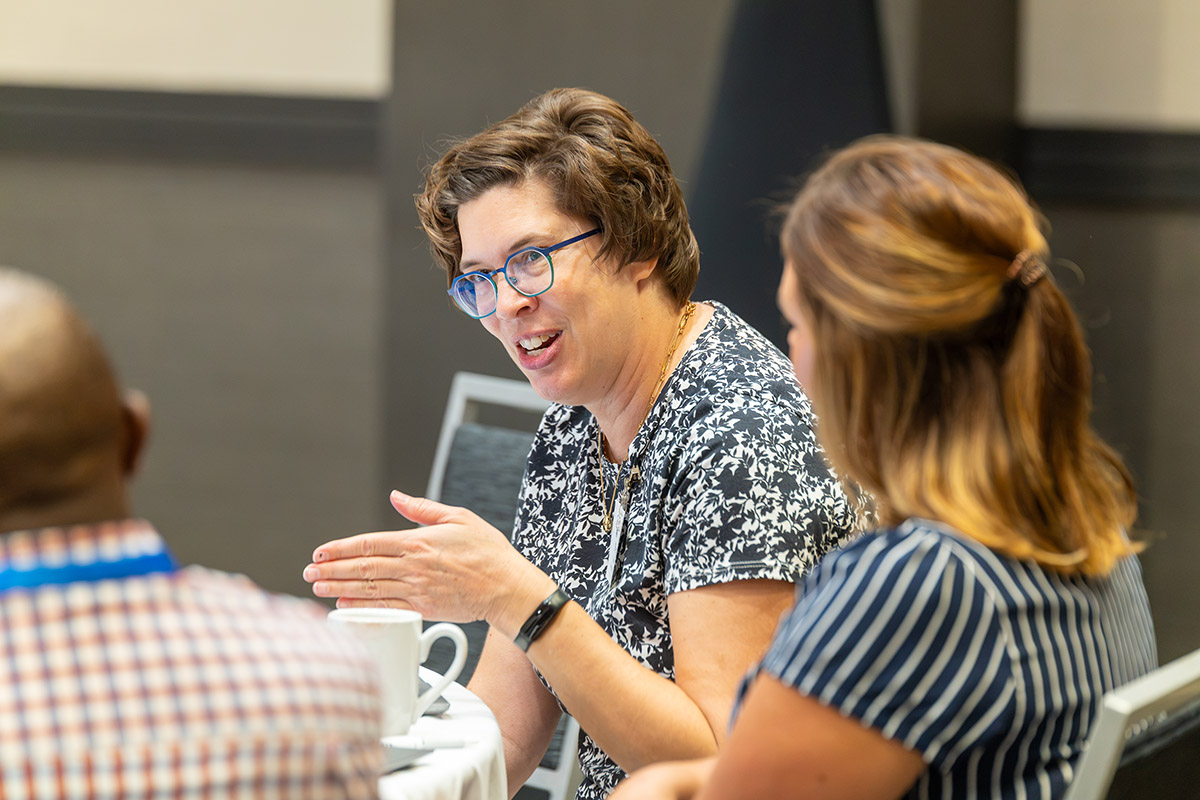
Megan Undeberg, Ph.D., from Washington State University, talks with her tablemates during the morning brainstorming session.
Networking and finding opportunities to collaborate was a critical takeaway from the workshop for Megan Undeberg, PharmD, professor and assistant dean of Rural Health in the Department of Pharmacotherapy at Washington State University.
“The best part of the day was seeing that lots of like-minded people exist across the United States,” said Undeberg, who was in a breakout group on workforce recruitment and retention. “There were 17 or 18 people, and we all are thinking along the same lines and all having common goals. Now there’s this group of people who can put our heads together to find funding, find shared opportunities and find ways to grow recruitment and retention of our rural health providers.”
Preparing for the future of rural health
The future of rural health will require creativity, partnership and a willingness to rethink traditional approaches.
The Rural Health RIC Workshop represents an important first step toward building that future by creating a network where ideas can grow, partnerships can develop and research can move beyond the page and into communities.
At its core, ORAU’s Rural Health RIC is about connection – researchers with communities, ideas with opportunities, innovation with impact. Improving rural health is not just about addressing today’s challenges, it’s about building a stronger, more connected health care future for generations to come.