
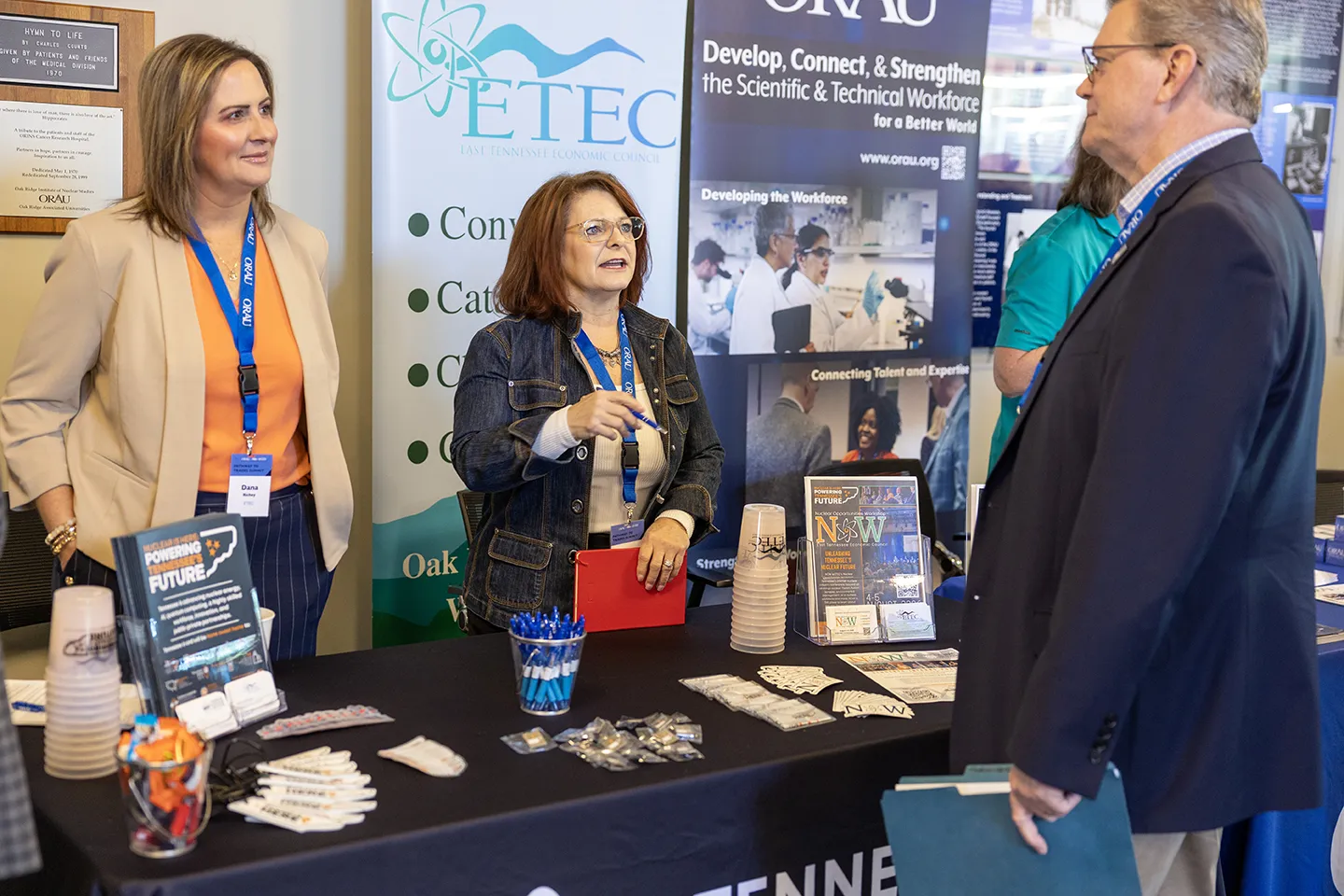
Leaders from labor organizations, industry, government, education and community support services convened at the Pathway to Trades Summit, held at ORAU’s Pollard Center in Oak Ridge, Tenn., on May 14, 2026, to address one of the region’s most urgent challenges: building a skilled workforce capable of meeting the rapidly growing demands of the nuclear sector.
The summit brought together a broad coalition focused on aligning workforce development efforts with unprecedented industry growth. The Pathway to Trades Summit was sponsored by ORAU, the North America’s Building Trades Unions and the Tennessee Nuclear Network.
Ashley Stowe, ORAU Chief Research and University Partnerships Officer, welcomed guests to the Pathway to Trades Summit on Thursday, May 14, 2026.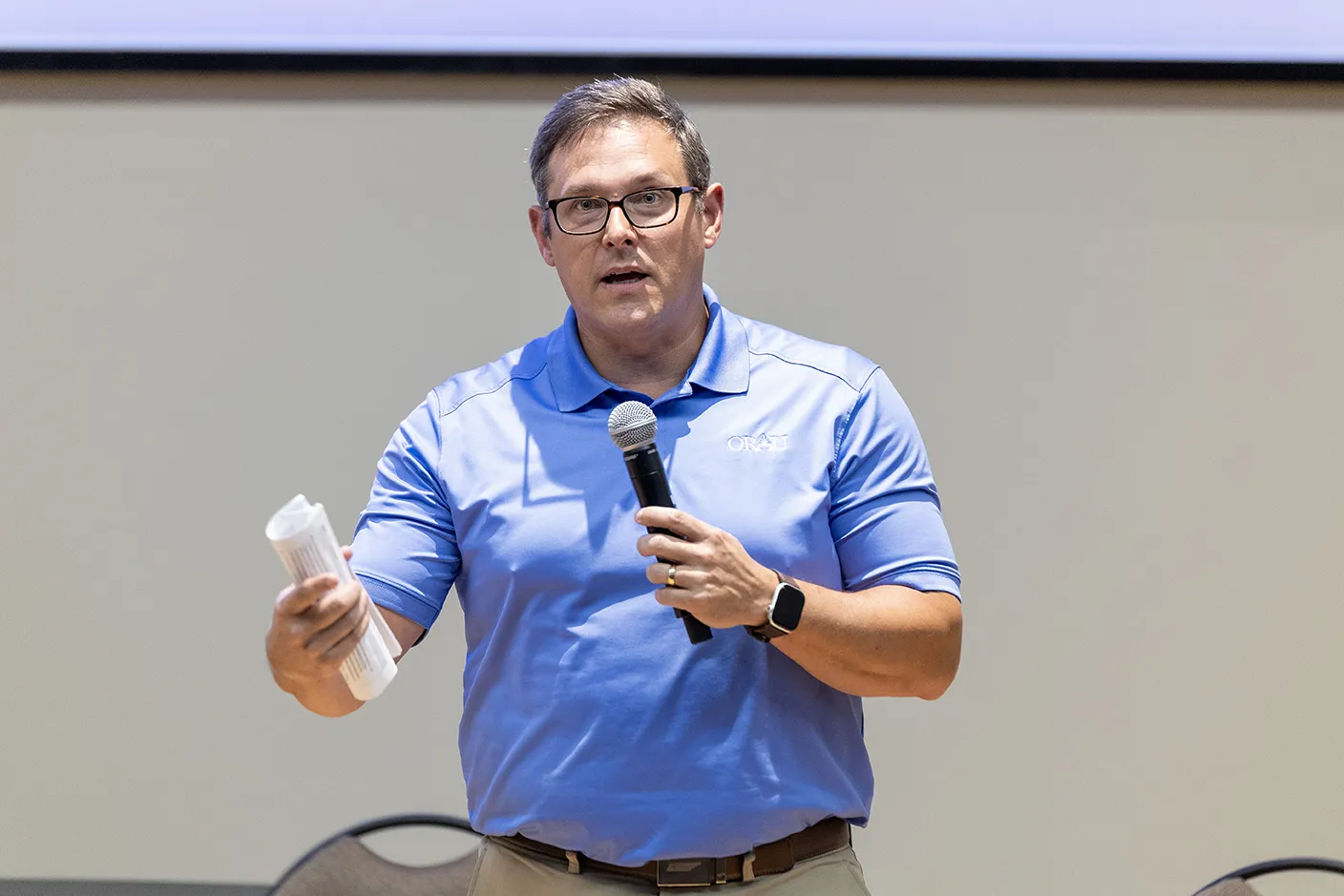
“The scale of energy and nuclear development over the next decade will demand a skilled trades workforce that we do not currently have at the level we will need,” said Meghan Millwood, ORAU president and CEO. “This is not an issue for any one stakeholder group to solve alone—it is a shared responsibility.”
Keynote speakers and panelists emphasized the need for coordinated action across industry, unions, educational institutions and community organizations to create accessible, scalable pathways into high-demand careers. With major investments in advanced nuclear technologies and infrastructure underway, speakers underscored that workforce readiness will be the determining factor in the region’s ability to deliver on its economic and energy potential.
“Our goal is not just conversation, it’s coordination,” Millwood added. “If we get this right, we don’t just build jobs, we create lasting careers, strengthen families, and secure the future of this region.”
The event highlighted East Tennessee’s central role in the nation’s nuclear resurgence, with Oak Ridge identified as a hub for innovation, research and workforce development. Rep. Chuck Fleischmann, whose district includes Oak Ridge and who is known as “Tennessee’s nuclear representative” for supporting the growth of the nuclear energy sector in the region, reinforced the urgency of the moment, pointing to a “once-in-a-generation opportunity” to expand America’s energy capacity while strengthening national security and economic competitiveness.
More than a discussion, the summit challenged attendees to identify concrete actions their organizations can take within the next six to twelve months to strengthen workforce pipelines and remove barriers to entry.
Building the nuclear workforce of the future requires partnering — ‘no one can do it alone’
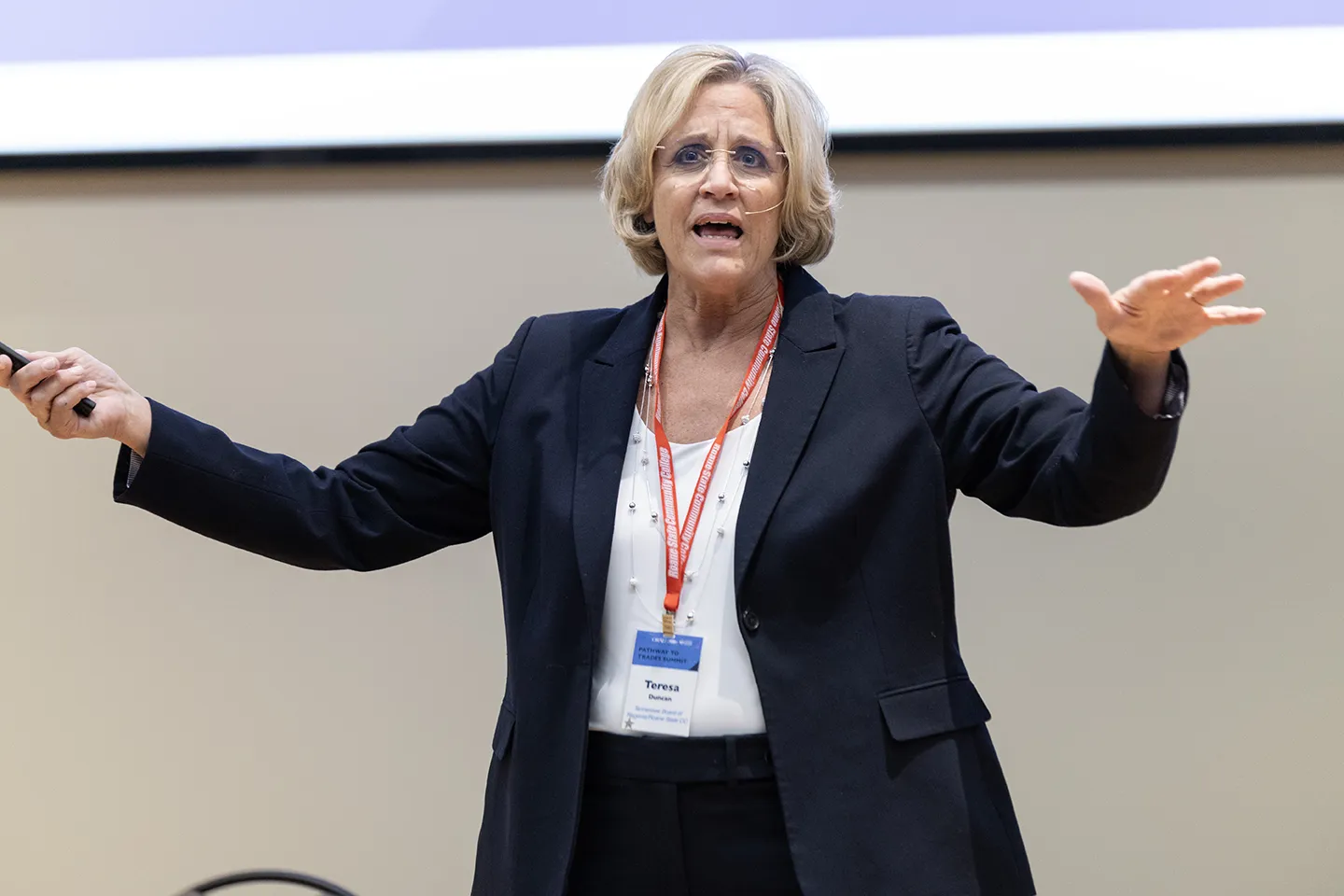
Teresa Duncan, lead nuclear strategist for the Tennessee Board of Regents and vice president of workforce and community development at Roane State Community College, addresses participants of ORAU’s Pathway to Trades Summit.
The Pathway to Trades Summit brought together an extraordinary mix of leaders from industry, education, labor, government, workforce development, and community organizations — all focused on one urgent challenge: How do we build the workforce needed to support the rapid growth of nuclear energy and advanced manufacturing in Tennessee and beyond?
The answer that emerged throughout the day was clear: no single organization can do this alone.
“That’s what today is all about,” said Teresa Duncan, lead nuclear strategist for the Tennessee Board of Regents and vice president of workforce and community development at Roane State Community College. “Where can we connect and partner. There are partners everywhere.”
The summit showcased what is possible when partners align around a shared mission — creating real pathways into high-demand careers while ensuring communities are prepared for the opportunities ahead.
A historic moment for nuclear energy
Michelle Scott, acting deputy assistant secretary for strategic crosscuts, U.S. Department of Energy Office of Nuclear Energy, address the Pathway to Trades Summit.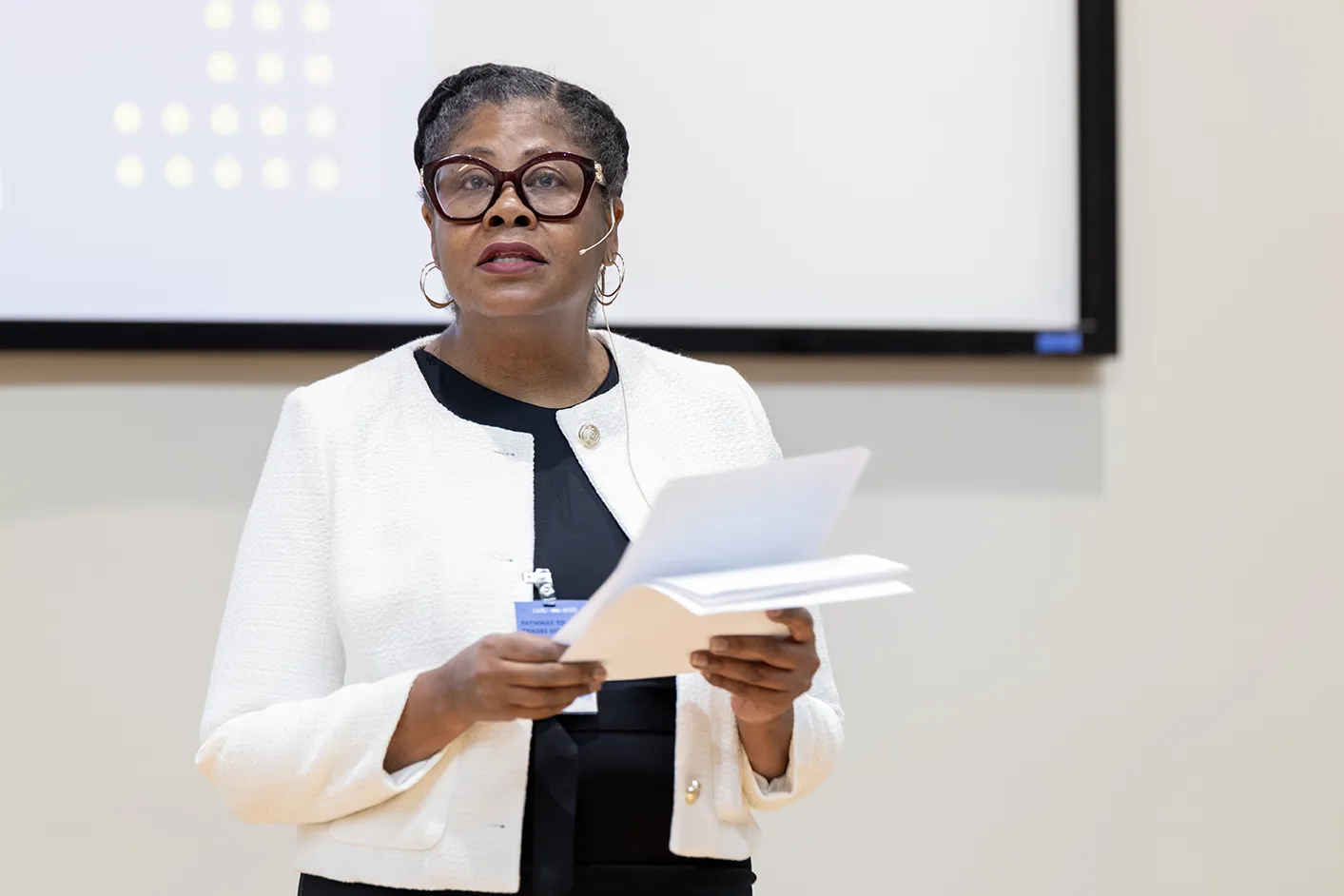
Speaker after speaker emphasized that the United States is entering a pivotal era for nuclear energy.
Fleischmann, via video, and Michelle Scott, acting deputy assistant secretary for strategic crosscuts, U.S. Department of Energy Office of Nuclear Energy, discussed ambitious national goals to dramatically expand nuclear energy capacity in the coming decades. Industry representatives described unprecedented demand signals already emerging across the sector. Tennessee, with its deep nuclear roots, world-class research institutions, skilled trades infrastructure, and growing industrial base, is positioned at the center of that expansion.
The need for people, though, is both immediate and needs to be built for the long term.
The workforce demand will require thousands of workers across skilled trades, engineering, construction, operations, cybersecurity, manufacturing, environmental management and support services. Speakers expect the demand for workers to increase over the next 10 to 15 years.
“The administration has set a bold goal of quadrupling nuclear energy capacity from 100 gigawatts to 400 gigawatts by 2050,” Scott said. “People are, by far, the foundation of how we are going to support the nuclear renaissance.”
To meet this energy capacity increase, the nuclear industry anticipates significant growth, projecting 375,000 jobs nationwide with the deployment of advanced reactors, Scott added.
In Oak Ridge, thousands of workers are needed now to meet the current demands of the nuclear energy sector.
Brooks Young, executive director of the State of Tennessee’s TNWorks program, said growth in the nuclear energy sector will spill over to other sectors of the workforce.
“Our data tells us that there’s about a seven-times multiplier effect for every one nuclear job,” Young said, noting that nuclear energy growth will demand growth in healthcare, hospitality, housing, transportation and other supporting industries.
Workforce development must start earlier in the education lifecycle
One of the strongest themes throughout the summit was the importance of early exposure and career awareness, and education that takes students out of the classroom for hands-on experiences.
Cindy Lockett, career and technical education director for Roane County Schools, highlighted a successful pre-apprenticeship program in Roane County that connects students directly to career pathways before graduation. Programs like this help young people understand that rewarding, high-paying careers exist right in their communities.
Jason Andrews, director of the Cooperative Agreement of Labor and Management, a partnership of between the members of the Knoxville Building and Construction Trades Council and their employers, highlighted that the East Tennessee Apprenticeship Readiness Program (ETARP), at Roane State Community College’s Oak Ridge campus, successfully prepares students for skilled trades apprenticeships.
Programs like ETARP have “leveled the playing field between university and apprenticeships,” Lockett said.
On National Signing Day “we had students committing to the University of Tennessee sitting right next to a student who was joining the union, and it is valued the same,” Lockett said.
Education models that include after-school programs, community partnerships, youth organizations, career exploration events and hands-on learning experiences could expand education beyond traditional classrooms.
The idea is not simply recruitment. It is long-term talent cultivation.
Skilled trades apprenticeships are essential
Union leaders and workforce advocates reinforced that the future nuclear workforce will depend heavily on all 16 skilled trades.
Construction, electrical work, insulation, pipefitting, welding, HVAC and other crafts are critical to supporting both existing facilities and future projects.
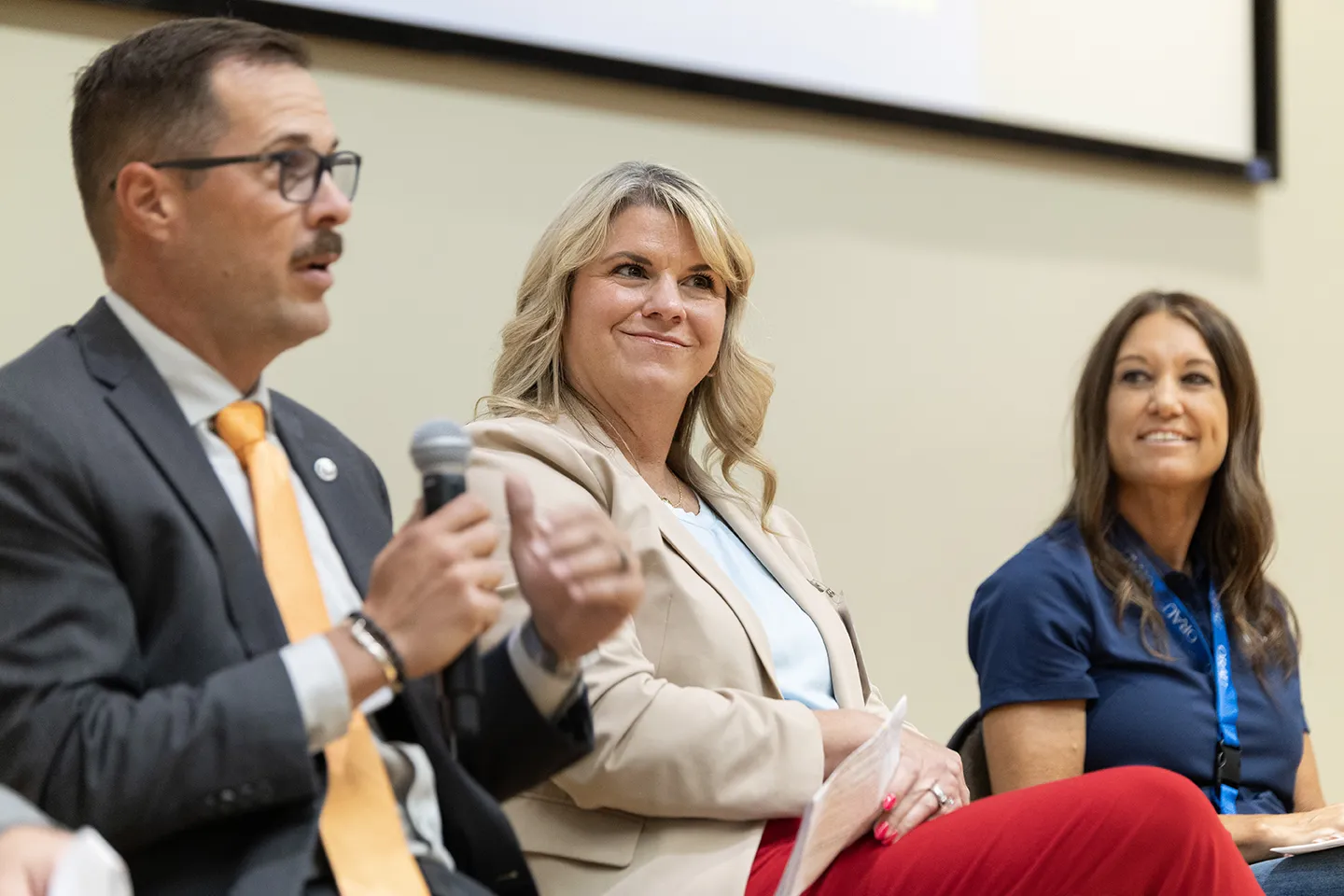
Panelists discussed the workforce needs of the burgeoning nuclear industry in Tennessee.
Leaders from building trades organizations described major investments in registered apprenticeships and training infrastructure.
“Our local apprenticeships are funded by our members,” said Charlie Woody, president of the Knoxville Builders and Construction Trade Council and Business Manager, Insulators #46. “With our members funding apprenticeships themselves, we all have skin in the game.”
Apprenticeship programs produce skilled workers and create direct pathways into family-sustaining careers without requiring traditional four-year degrees. “We work to ensure our members secure a good-paying job and good contracts,” Woody said.
A recurring point throughout the summit was that apprenticeships should be viewed as premier career pathways and not as secondary, “lesser” options.
The workforce conversation has evolved beyond “college versus trades.”
The future requires both.
Veterans represent a powerful talent pipeline
Another major focus was veteran workforce transition programs, like SkillBridge, a U.S. Department of War program that allows transitioning service members to gain civilian work experience through internships, apprenticeships and training during their last six months of military service.
“The transition from military to civilian employment can be intimidating, and employers can help by learning how to interpret military experience and translate it into civilian job qualifications,” said Kristen Rawson, manager of the Y-12 National Security Complex Operations Center and a SkillBridge expert.
She added that veterans often come to civilian employers with leadership experience, technical expertise, mission-focused discipline, safety culture familiarity and security clearance eligibility.
Removing barriers matters as much as recruitment
Panelists at the Pathway to Trades Summit discuss the need for wraparound services, like childcare and transportation to enable workers to remain committed to training and apprenticeship programs.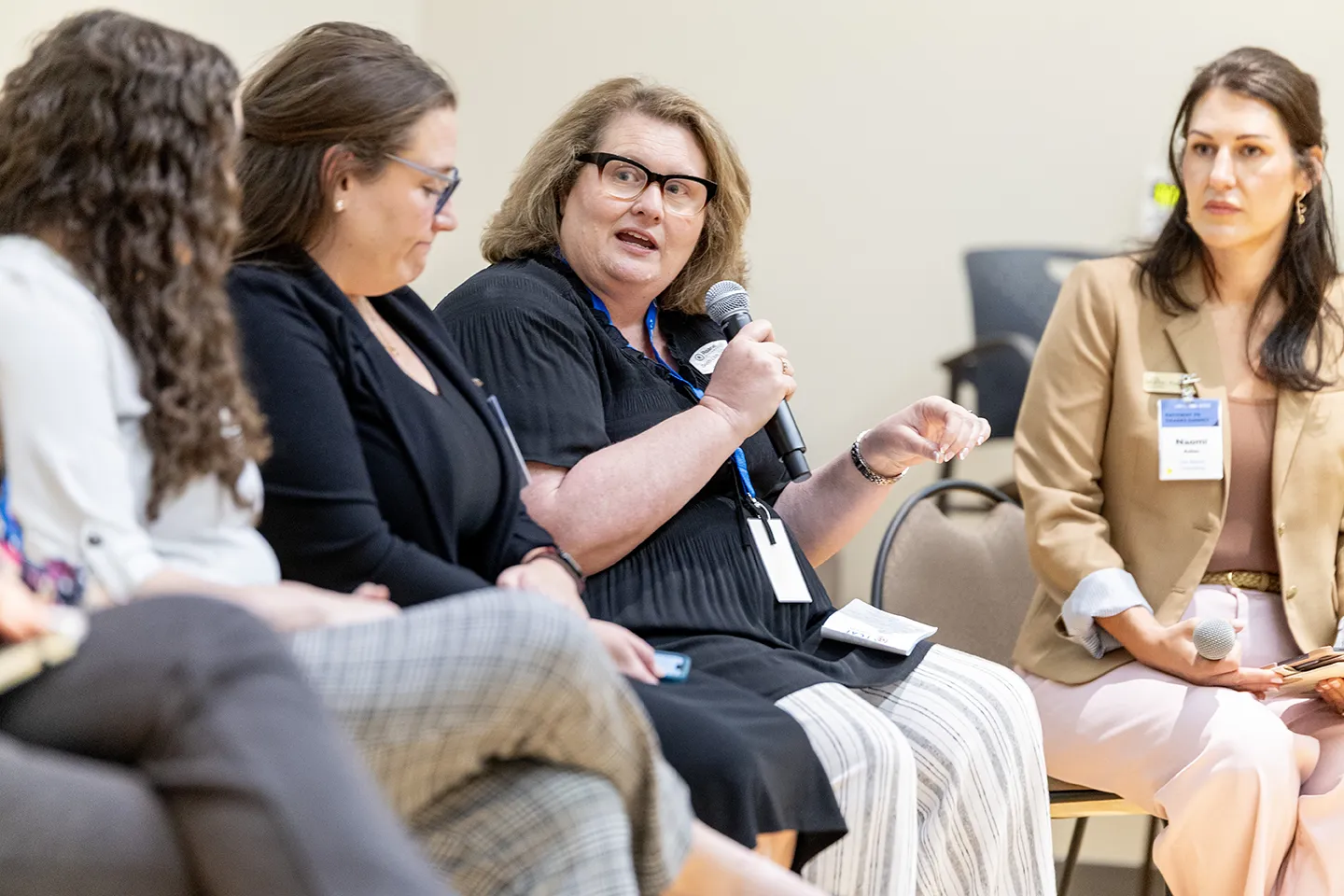
One of the most important conversations of the day centered around workforce barriers.
Speakers emphasized that attracting workers is only part of the challenge. Supporting them is equally important. Panelists discussed obstacles to work that include transportation, childcare, housing availability, access to equipment and work clothing, financial support during training, and awareness of available resources.
“People don’t drop out of the [career] pathways that exist because they lack the ability,” said Sara Rymer, business agent for Painters #437. “They drop out because life gets in the way of those opportunities.”
The conversation reinforced that workforce development is not simply an education issue. It is a community infrastructure issue.
“We’re not just talking about workforce development. We’re talking about what it takes for a real human with responsibilities and stress and a whole life outside of work,” said Dawn Carlock, vice president of Roane Alliance.
Building a workforce ecosystem requires wraparound support systems that help people successfully enter and remain in career pathways.
Collaboration is the competitive advantage
One of the reasons Oak Ridge has become a hub for the nuclear energy industry is the level of collaboration already happening locally and across Tennessee.
“Communication and collaboration across all stakeholders and workforce partners are the secret to Oak Ridge’s past nuclear energy success and will be the driver of future workforce sustainability,” said Michelle Goodson, co-chairman of the Tennessee Nuclear Network (TN2) workforce development team and director of the ORAU STEM Accelerator.
Goodson added that many of the topics raised during the Pathway to Trades Summit echo priorities identified in the Nuclear Energy Academic Roadmap (NEAR), which was published by ORAU and the Partnership for Nuclear Energy in 2025. The NEAR makes recommendations around four strategic priorities: enhancing nuclear career awareness, supporting pipeline and pathway development, identifying financial support, resources and programs; and optimizing academic resources through collaboration.
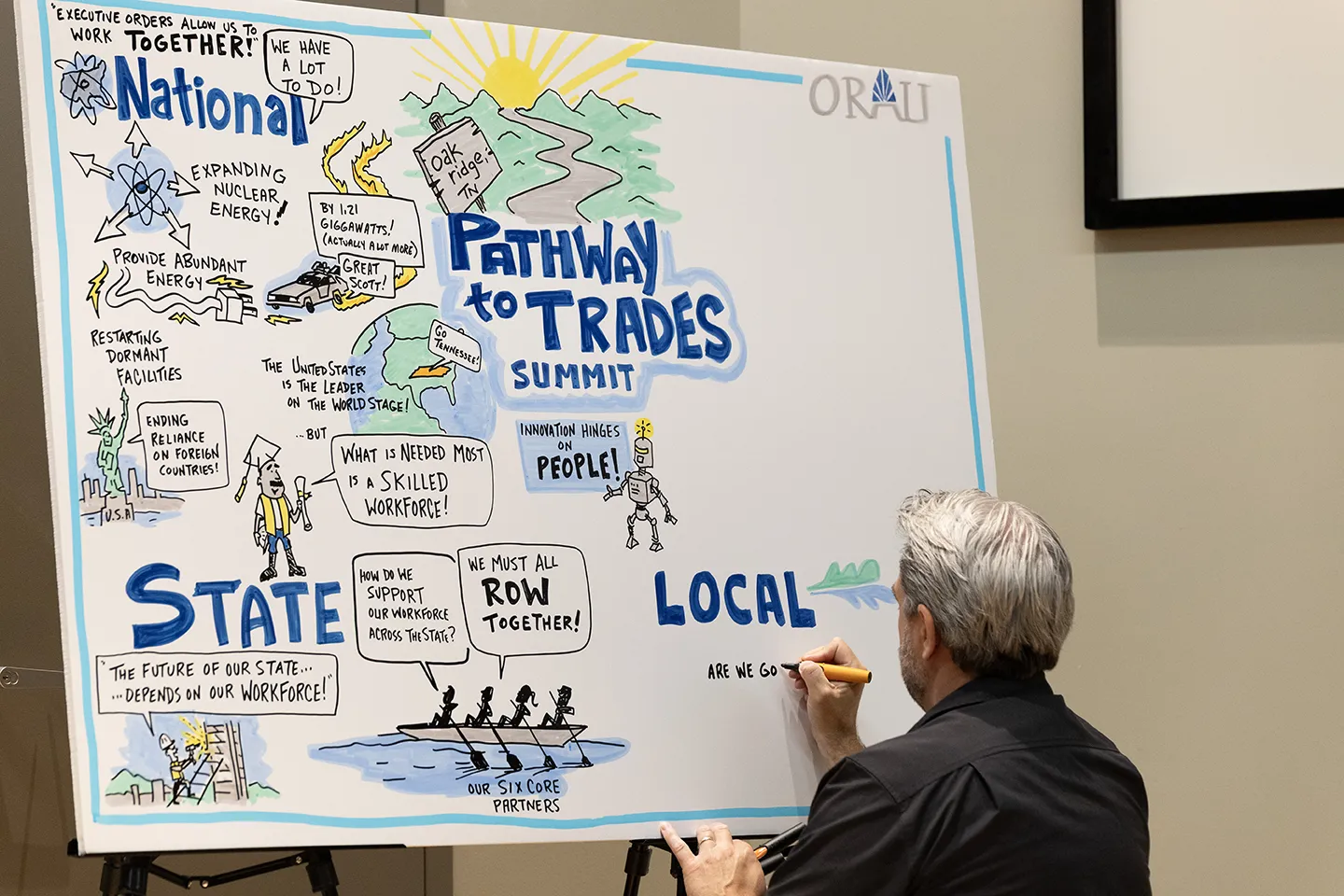
A Sketch Effect artist captured notes from the summit.
Topics addressed during the Pathway to Trades Summit included:
- Enhance nuclear career awareness
- Strengthen recruitment and support programs for veterans and emerging talent
- Integrate career awareness into STEM and Career and Technical Education programs
- Foster community and industry engagement
- Support pipeline and pathway development
- Establish apprenticeship programs
- Support emerging talent
- Identify financial support, resources and programs
- Engage industry and government partners
- Provide wraparound support services
- Optimize academic resources through collaboration
- Raise awareness and promote existing programs
- Form inter-institutional partnerships
“We’re putting the recommendations of the NEAR into action, which is exciting,” Goodson said.
Oak Ridge is already leading
The summit made one thing unmistakably clear: Oak Ridge is not waiting for the future of advanced energy and nuclear innovation. It is actively building it. Regional stakeholders have assembled a powerful ecosystem capable of supporting national energy priorities while creating transformational career opportunities for its citizens.
Still, the need for skilled trades workers is real and urgent. This challenge cannot be solved with small, isolated efforts. It requires sustained collaboration, creativity, investment and action.
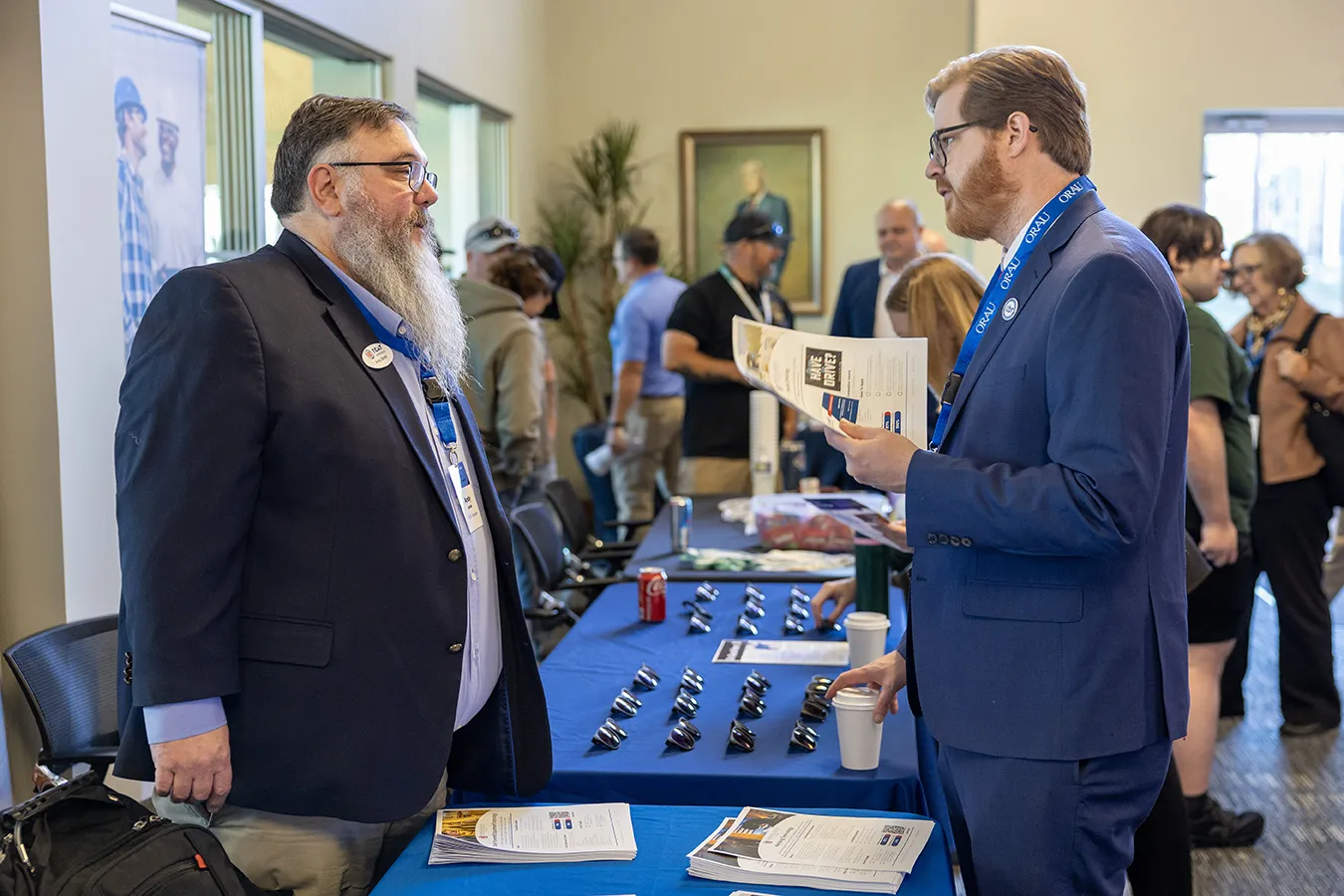
The nuclear renaissance requires collaboration across various industries and communities.