
New investments, expanding facilities and emerging technologies are positioning Tennessee and especially the Oak Ridge region, to be at the forefront of America’s nuclear energy future. Realizing that potential will require more than new facilities and financial investments, however. It will require thousands of skilled workers prepared to build, operate and sustain a rapidly growing industry and will require the wraparound services and infrastructure to support them.
That was the clear message at ORAU’s Next Steps for the Nuclear Workforce event on Tuesday, Oct. 20, 2026. The event, the second in ORAU’s Pathway to Trades event series, featured a keynote address by U.S. Deputy Secretary of Energy James P. Danly and remarks from Congressman Chuck Fleischmann, whose district includes Anderson and Roane Counties. Sponsors were ORAU, the Tennessee Nuclear Network and North America’s Building Trades Unions.
The Next Steps for the Nuclear Workforce event brought together leaders from all levels of government, education, industry, organized labor and economic development to discuss strengthening career pathways, expanding workforce training and removing barriers that could prevent Tennesseans from participating in the industry’s growth.
The message throughout the gathering was clear: Tennessee’s nuclear future and workforce development depends on collaboration.
“No single organization can solve that challenge alone,” said Bill Tindal, director of the Tennessee Nuclear Network, the state’s official partnership advancing nuclear innovation, workforce development, and economic growth.
“Workforce development is central to our mission,” said Meghan Millwood, ORAU President and CEO. “ORAU recently released the East Tennessee Nuclear Workforce Demand Assessment, which highlights key insights and opportunities related to the workforce needs of the nuclear energy sector in East Tennessee.”
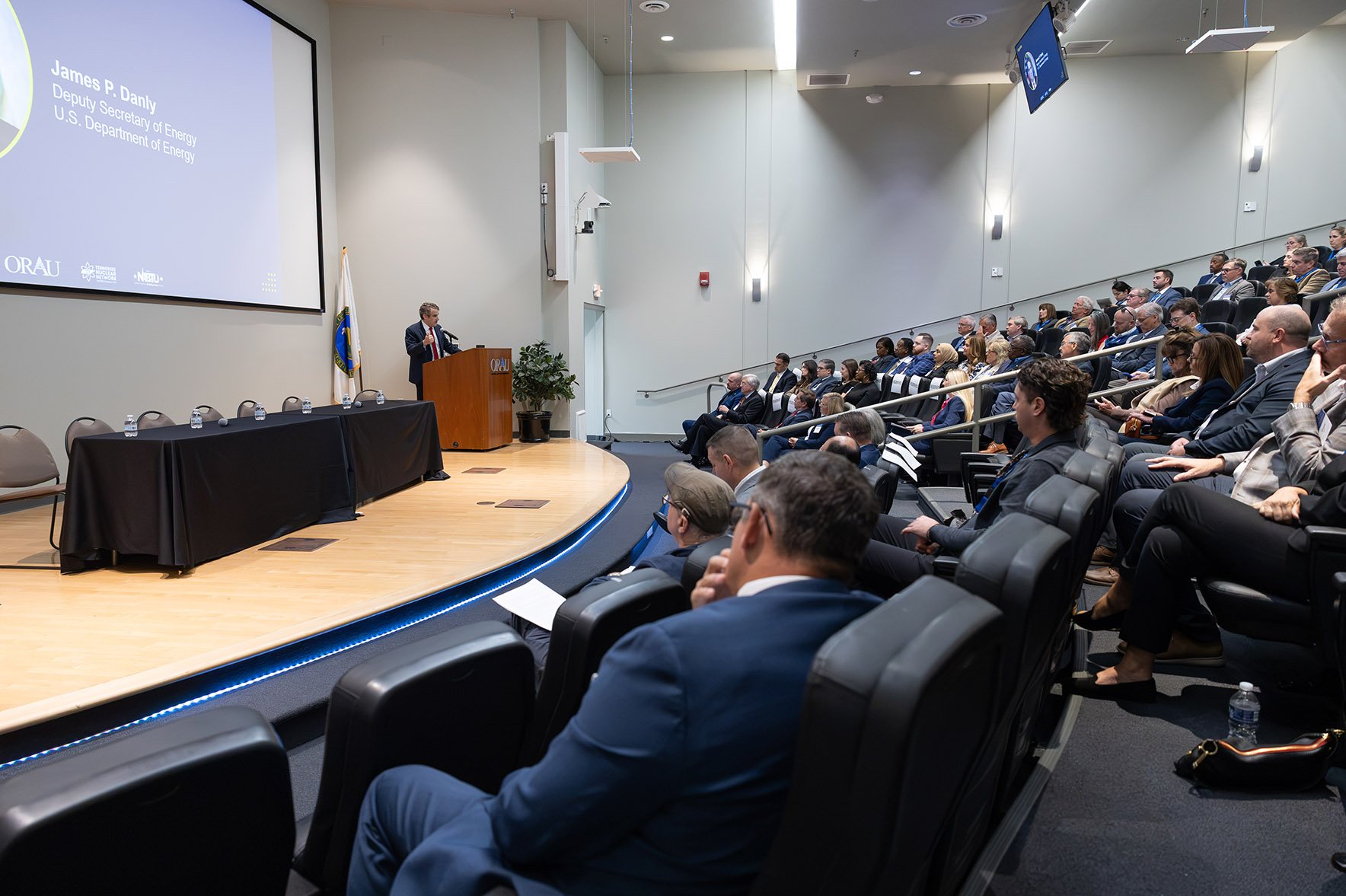
U.S. Deputy Secretary of Energy James P. Danly delivered the keynote address at ORAU’s Next Steps for the Nuclear Workforce event.
A historic opportunity—and a growing workforce challenge
Fleischmann, who advocates for the growth of the nuclear energy sector in Oak Ridge, reflected on the region’s historic contributions to national security, from the Manhattan Project through the Cold War and into today’s expanding nuclear industry.
He emphasized that Oak Ridge’s success has always depended on the people whose expertise makes complex projects possible, including skilled trades workers who will play an essential role in building and operating new facilities as nuclear companies continue to move to and expand across the region.
“Our trades are not apart from the community. You are our community,” Fleischmann said.
The federal government has established a goal of increasing U.S. nuclear energy capacity from approximately 100 gigawatts to 400 gigawatts by 2050. Meeting that target will require not only engineers and scientists, but also electricians, welders, pipefitters, chemical operators, technicians and construction professionals.
Danly emphasized that meeting the nation’s ambitious nuclear energy goals will require expanding workforce development efforts beyond the focus on Ph.D.-level scientists and traditional academic pathways.
He said the Department of Energy intends to broaden its workforce development priorities to include skilled trades workers, the importance of supporting apprenticeships, and building partnerships with a broader range of educational and training institutions, describing a shift toward opening opportunities to “the trades and skills of all types.”
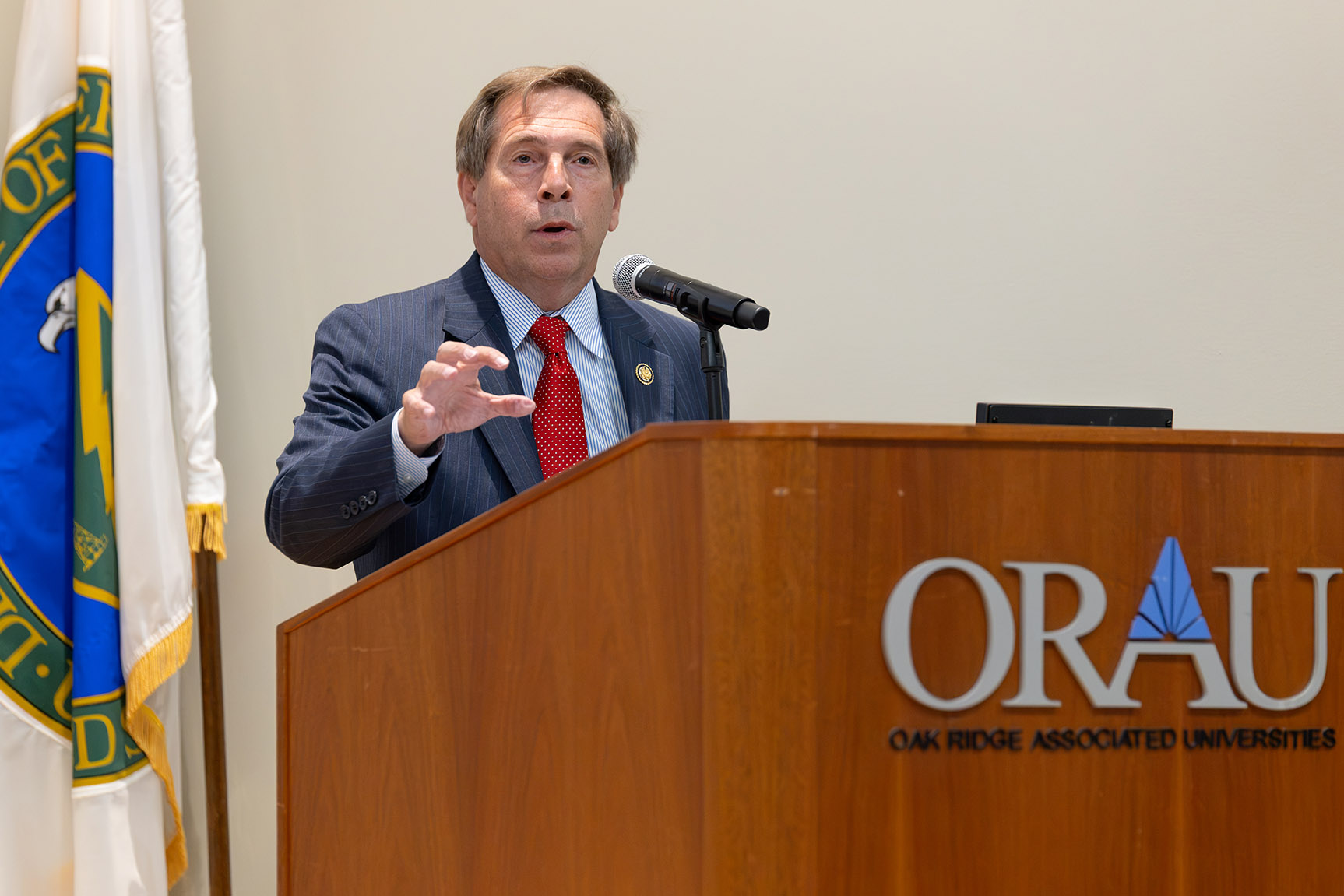
In his remarks, Congressman Chuck Fleischmann stressed that Oak Ridge's achievements have consistently relied on the expertise of its workforce, noting that skilled trades workers will be critical to constructing and running new facilities as nuclear companies continue relocating to and growing throughout the region.
New ORAU study identifies critical workforce needs
The What’s Next for the Nuclear Workforce event served as the official launch of the East Tennessee Nuclear Workforce Demand Assessment, which was developed by ORAU with participation from regional employers.
The assessment, informed by interviews with 14 companies and quantitative data from 11, includes projections that the workforce represented by participating employers could grow from approximately 17,000 workers to 21,000 by 2032. The study moves beyond national projections to examine the specific occupations, skills and hiring timelines that will shape the Oak Ridge region’s workforce needs.
National estimates suggest the nuclear industry could require approximately 375,000 workers by 2050. But regional employers need more precise information to determine where training investments can have the greatest impact. ORAU’s assessment is the first step toward providing that information for East Tennessee.
Construction workforce demand is expected to peak around 2032, while demand for operations personnel is projected to continue increasing through 2035.
The ORAU assessment identified several occupations facing particularly strong demand, including:
- Chemical plant and systems operators
- Electricians
- Nuclear reactor and power plant operators
- Welders, pipefitters and steamfitters
- Structural iron and steel workers
- Production and operations supervisors
The findings suggest that existing training pipelines may not produce enough qualified workers in several critical occupations without additional investment and expanded capacity. Chemical plant operators, for example, represent a particularly pressing need, with projected demand potentially exceeding the number of workers currently entering training programs.
The assessment also shows that technical qualifications alone are insufficient. Employers consistently identified communication, accountability, problem-solving, reliability and a strong safety culture as essential workforce competencies.
For some highly specialized positions, employees may require 12 to 24 months of training and experience before reaching full productivity.
These findings underscore the importance of anticipating workforce demand and proactively expanding workforce development rather than waiting until shortages begin delaying projects.
Building pathways from classrooms to careers
A panel discussion featured representatives from several stakeholders, including ORAU, Orano, the International Brotherhood of Electrical Workers, Sheet Metal Workers, Chattanooga State Community College, the Oak Ridge Chamber of Commerce and Roane County Schools. Panel members focused on a variety of issues, including discussing apprenticeship programs, technical education and employer partnerships, and removing barriers to careers in the skilled trades.
Daniel Smith, representing IBEW Local 270, emphasized the importance of making skilled-trades careers accessible to students and adults seeking new opportunities.
“Apprenticeships provide a proven approach by combining classroom instruction with paid, hands-on experience,” Smith said, adding that “expanding those programs requires eliminating unnecessary barriers and helping prospective workers understand how to enter the trades.”
Training must also extend beyond entry-level positions to prepare experienced workers for supervisory and project management responsibilities.
Bruce Coulter, P.E., professor of engineering and chemical engineering at Chattanooga State Community College, highlighted the flexibility of community colleges to respond quickly to changing employer needs.
“Community colleges can develop specialized certificates, modify instructional schedules and expand training capacity more rapidly than many traditional degree programs,” he said, emphasizing that students often have limited awareness of the variety of career opportunities available in the nuclear industry.
Internships, apprenticeships and other work-based learning experiences can help students understand potential careers, strengthen their commitment to training and make more informed decisions about their futures.
Together, the panelists reinforced a central recommendation of the ORAU assessment: workforce development must be closely connected to the employers and industries that will ultimately hire graduates.
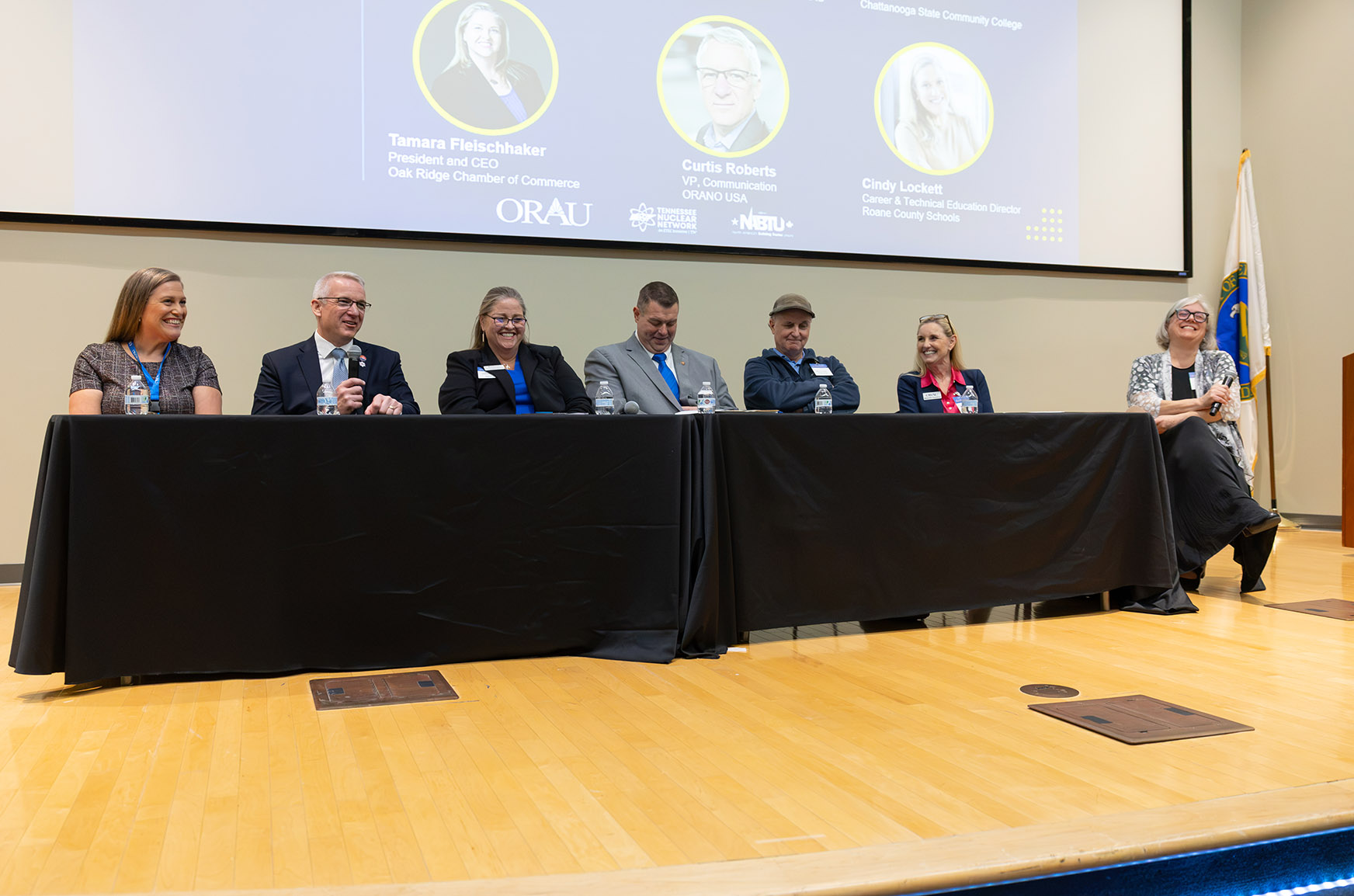
Panelists echoed a key finding from the ORAU assessment: workforce development efforts need to be closely aligned with the employers and industries that will eventually hire graduates.
Removing barriers beyond the classroom
Preparing workers is only part of the challenge. Helping them enter and remain in the workforce requires addressing practical obstacles that training programs alone cannot solve.
Tamara Fleischhaker, president and CEO of the Oak Ridge Chamber of Commerce, discussed the economic importance of providing wraparound support services for workers, like childcare, transportation, housing and other support systems.
“Childcare needs to be part of the infrastructure,” she said, describing how inadequate childcare can prevent qualified workers from accepting jobs, completing apprenticeships or maintaining consistent employment.
She cited a Tennesseans for Quality Early Education study estimating that childcare challenges contribute to approximately $2.6 billion in annual economic losses in Tennessee, affecting families, employers and tax revenues. For employers, those losses can appear as missed shifts, increased overtime, lower productivity and higher employee turnover.
The discussion highlighted opportunities for strategies successfully implemented in other locations including shared employer-supported childcare facilities, partnerships with existing providers and solutions designed around the nontraditional schedules common in manufacturing and nuclear operations.
Workforce development cannot and does not end when a person receives a credential. Communities must also ensure that workers and their families have the resources necessary to sustain successful careers.
Starting earlier: Preparing for the next generation
One of the most compelling examples of workforce collaboration came from Roane County Schools.
Cindy Lockett, director of Career and Technical Education, described how the district has worked with labor organizations, employers and educational partners to strengthen its apprenticeship readiness program.
When Lockett began working with the district approximately five years ago, only three students were entering union apprenticeships after graduation. By the end of summer 2026, 33 students had completed the East Tennessee Apprenticeship Readiness Program.
The program introduces students to skilled-trades careers while they are still in high school, helping them transition more directly into apprenticeships and employment.
Lockett said 60 students have already expressed interest in participating during the next semester, creating an opportunity to expand the program across the district’s five high schools. ORAU is working with the program on ways to scale it to reach additional school systems and add additional training.
“Everyone is employable. Everyone has a career,” Lockett said, adding that modern career and technical education offers far more than traditional vocational programs and can provide meaningful pathways for students with diverse interests and abilities.
The program’s success demonstrates how sustained collaboration among schools, employers and organized labor can produce measurable results. It also highlights the importance of introducing career opportunities early, involving families and giving students clear expectations about training requirements, potential earnings and employment opportunities.
Curtis Roberts, vice president of communications and press officer from Orano USA, said that part of their future workforce is currently “sitting in little plastic chairs in elementary schools.”
Roberts emphasized the importance of corporate community outreach to K-12 schools for nuclear companies like Orano who have moved into the Oak Ridge area, starting education about nuclear earlier, and inspiring younger children to be excited to pursue careers in nuclear when they begin in earnest to pursue their educational and career pathways.
Turning collaboration into action
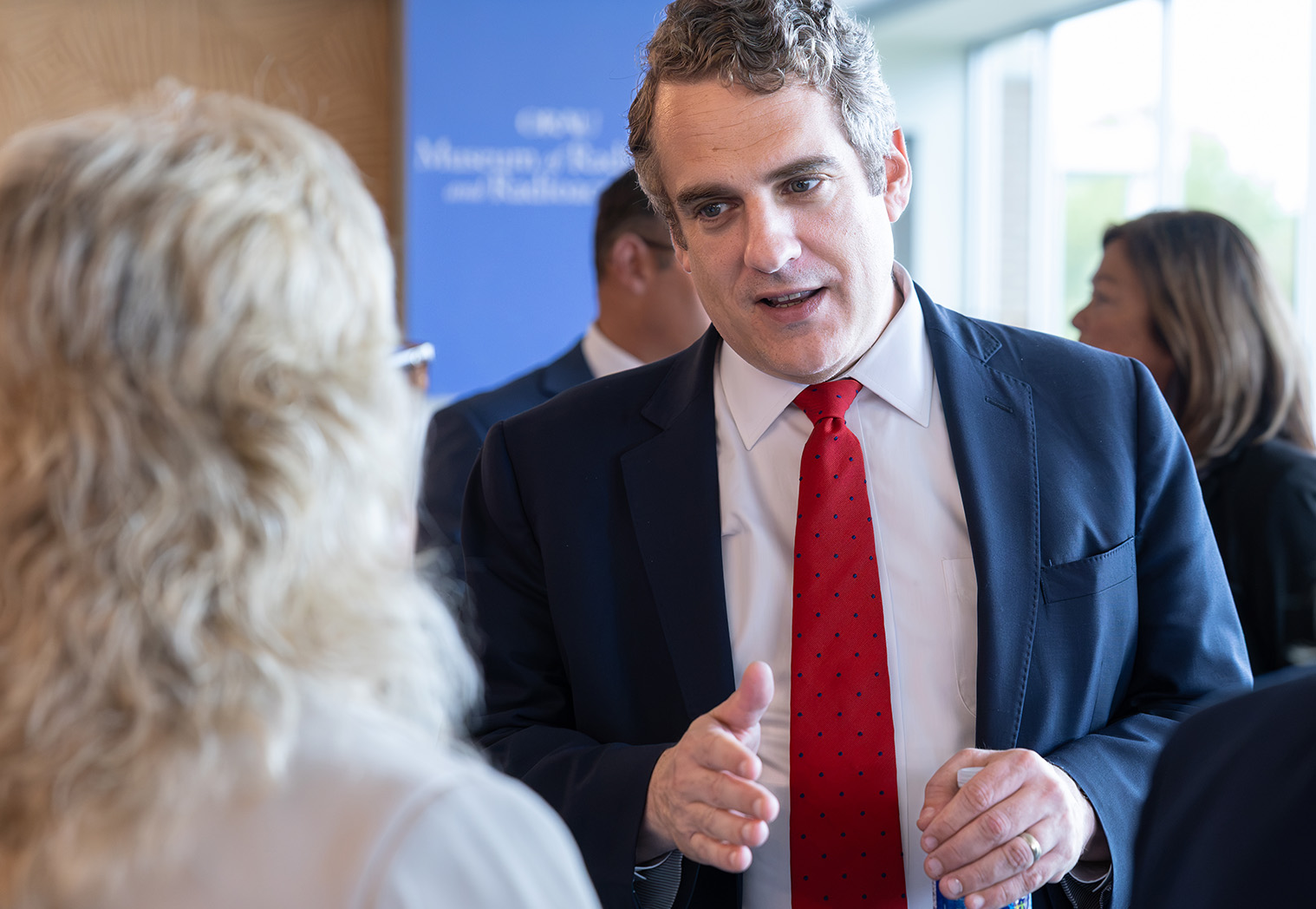
U.S. Deputy Secretary of Energy James P. Danly spoke with attendees at ORAU’s Next Steps for the Nuclear Workforce event.
All the speakers at the What’s Next for the Nuclear Workforce event reinforced the importance of building on the region’s existing partnerships to successfully meet the workforce needs of the nuclear industry.
Tennessee has already committed more than $150 million to initiatives supporting its nuclear workforce pipeline, according to information presented during the event. The challenge is ensuring those investments align with the occupations facing the greatest demand.
That includes expanding apprenticeship capacity, investing in modern training equipment, strengthening community college programs, improving career awareness and supporting workers who face transportation, childcare or other barriers. It also means ensuring that industry partners communicate their workforce needs early enough for educators and training providers to respond.
For ORAU, the workforce demand assessment provides an important foundation for those conversations, helping partners move from broad recognition of workforce challenges to targeted strategies grounded in regional data.
The event demonstrated that East Tennessee possesses many of the essential ingredients for success: established nuclear facilities, innovative companies, educational institutions, experienced labor organizations and a long history of collaboration.
The next step is connecting those resources at the scale and speed the industry requires.