
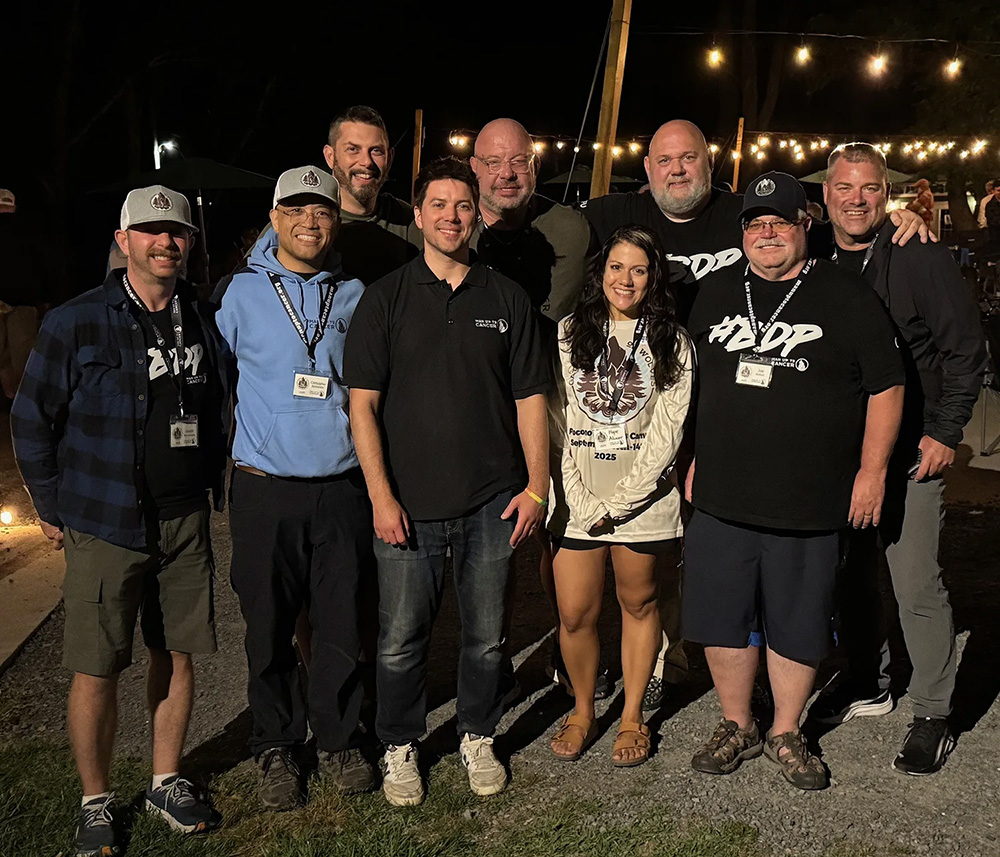
Members of the Man Up to Cancer Leadership Team
Just over a million men will be diagnosed with cancer this year. Prostate cancer is the most common cancer among men, followed by lung cancer and colorectal cancer, according to the American Cancer Society. Colorectal cancer is the number one cancer killer of men under the age of 50, according to The Colorectal Cancer Alliance
Men, mental health and cancer
Men diagnosed with cancer face significant mental health challenges, including anxiety, depression and fear. Societal expectations of men want them to be stoic and heroic in the face of life’s challenges, and to thereby push down or hide their emotions. Exacerbating all of this is a friendship recession among men, the majority of whom have few if any close friends, according to the American Survey Centers State of American Friendship survey.
In other words, men are supposed to hide their emotions and fight cancer alone. The American Cancer Society (ACS) published a 2024 study on the impact of loneliness on the mental health and clinical outcomes of cancer patients. According to the ACS, about 28% of survivors reported severe loneliness and another 24% reported some loneliness. Those reporting severe loneliness were 68% more likely to die from their disease.
In my humble opinion, the ACS study served as proof of concept for Man Up to Cancer, a non-profit organization dedicated to helping men facing cancer find social and emotional support by other men facing cancer. Since its founding in December 2019, the organization boasts a community of nearly 4,000 men from around the world who offer peer-to-peer support for patients in active treatment, their caregivers and survivors.
Gaps in research about men and cancer
In 2023, as part of a white paper I wrote on ORAU’s history of work in the cancer space—we operated a research hospital to investigate the benefits of using radiation to treat cancer for 24 years—I proposed a research study about Man Up to Cancer because at the time there was no research on the benefits of peer-to-peer support for men facing cancer. There is, though, lots of research on the benefits of such support for women facing cancer.
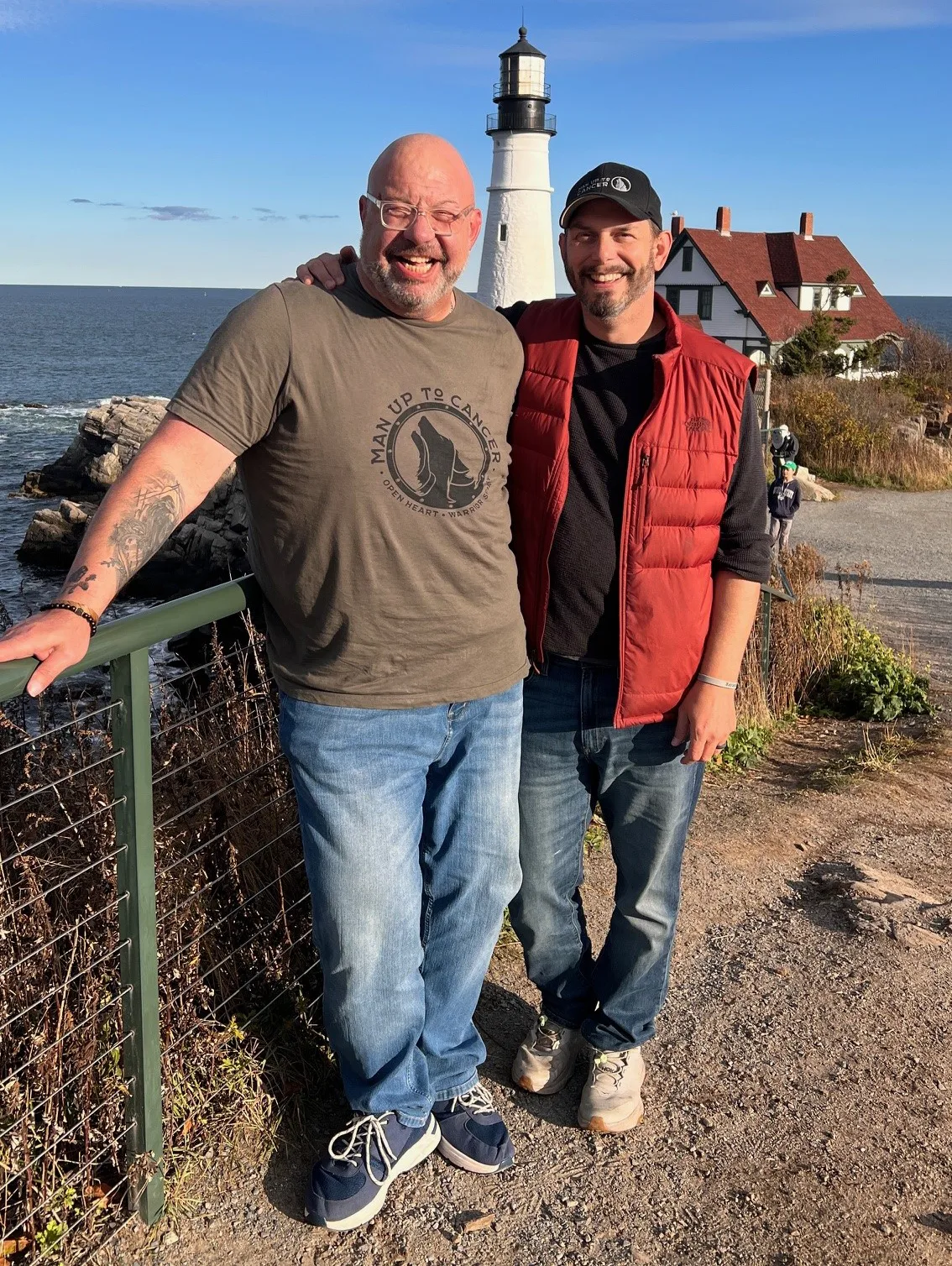
Michael Holtz with Trevor Maxwell, founder of Man Up to Cancer
ORAU stepped into this research gap and, through an ORAU-Directed Research and Development grant, funded a one-year pilot study on the feasibility, acceptability and preliminary efficacy of peer-to-peer support intervention for men facing cancer. Katherine Chyka, MPH, a health education specialist at ORAU, served as the principal investigator, and she teamed up with Teresa Hagan Thomas, Ph.D., assistant professor at the University of Pittsburgh School of Nursing (Pitt), who has done a lot of research on self-advocacy and cancer.
“This was a pilot study where we were trying to get both a group of newer members of Man Up to Cancer and more seasoned members of Man Up to Cancer to participate,” Thomas said on a recent episode of Further Together: The ORAU Podcast. “The newer ones, we were hoping that they would receive mentorship from the people who had been in the community longer.”
Mentors underwent 17 hours of navigation training through The George Washington University and five hours of training designed by Thomas and her team at Pitt. One of the early findings of the study is the need to develop a training model that is customized for providing peer-to-peer support rather than professional navigation services.
Newer members of Man Up to Cancer—those who joined within a year of the study start—were randomized to either receive support from a trained mentor or to continue with the support of the Man Up to Cancer community generally.
Men are willing to accept support and want to support other men
Data from the pilot study, which includes survey responses and interviews, are still being analyzed, but early takeaways indicate:
- Men are willing to accept formal and informal support from other men.
- Men facing cancer can connect over shared hobbies and interests, like guitar playing, fishing or tattoos, not just a shared cancer type.
- Men are willing to be trained as peer navigators to support other men facing cancer.
- Peer-to-peer support does not need to be overly prescriptive for either the navigator or the mentee.
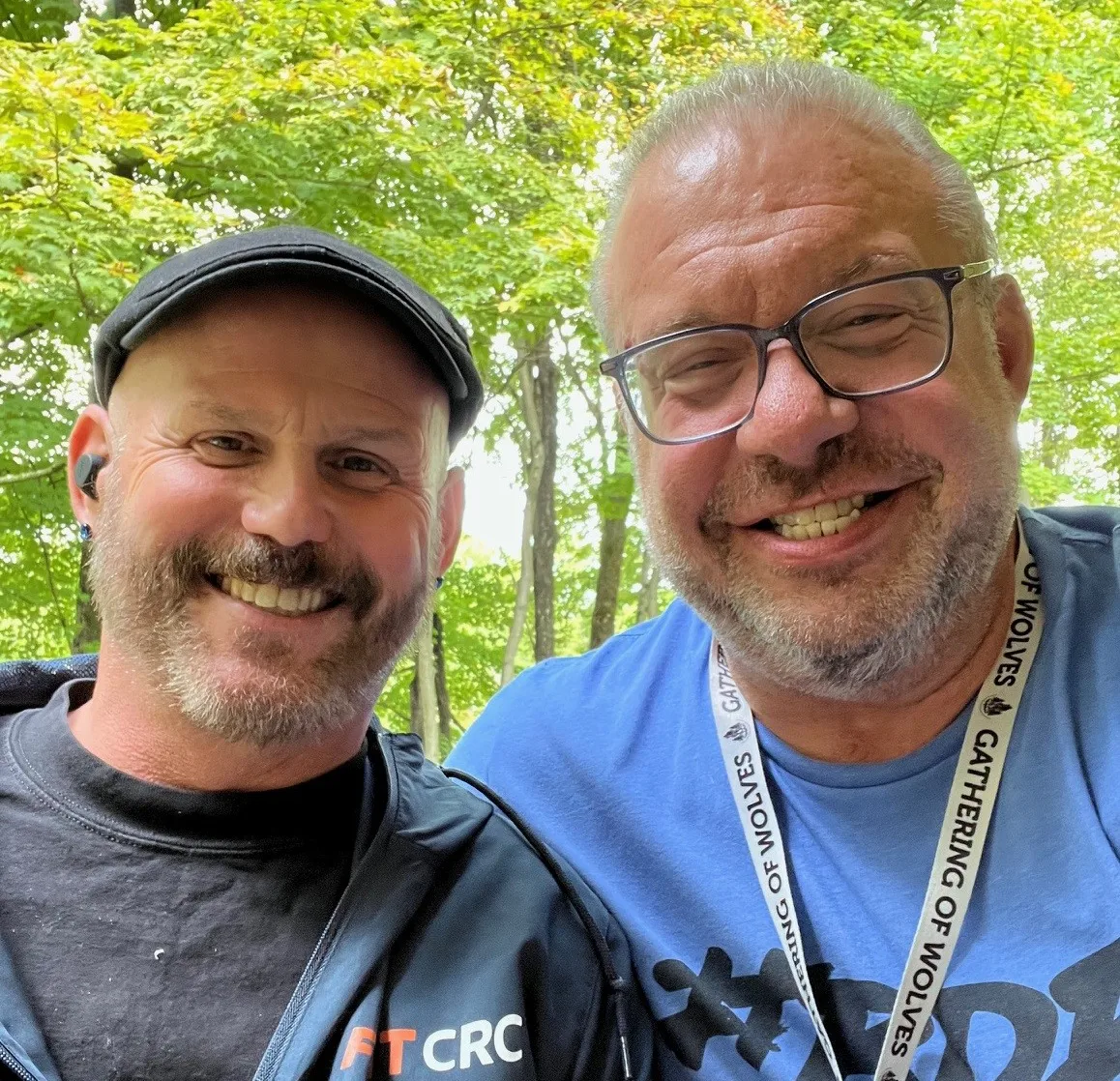
Michael Holtz with his late best friend, Ryan Vieth
That last point opens a broader question for further research, Chyka said. Was successful mentorship based on the prescriptive training that the navigators underwent or did the navigator-mentee pair make mentorship their own depending on the situation?
“My hunch is it’s a mix of both,” she said. “Our participants did such a great job of making the [navigation] their own. That helped us elucidate the finding that it’s up to the navigator-mentee pair. It’s up to them to find out what works best for them.”
Having recently completed the mixed-methods data analysis, Chyka and Thomas are currently developing a research paper for publication in a peer reviewed journal and are making plans to expand the study.
Disclosure
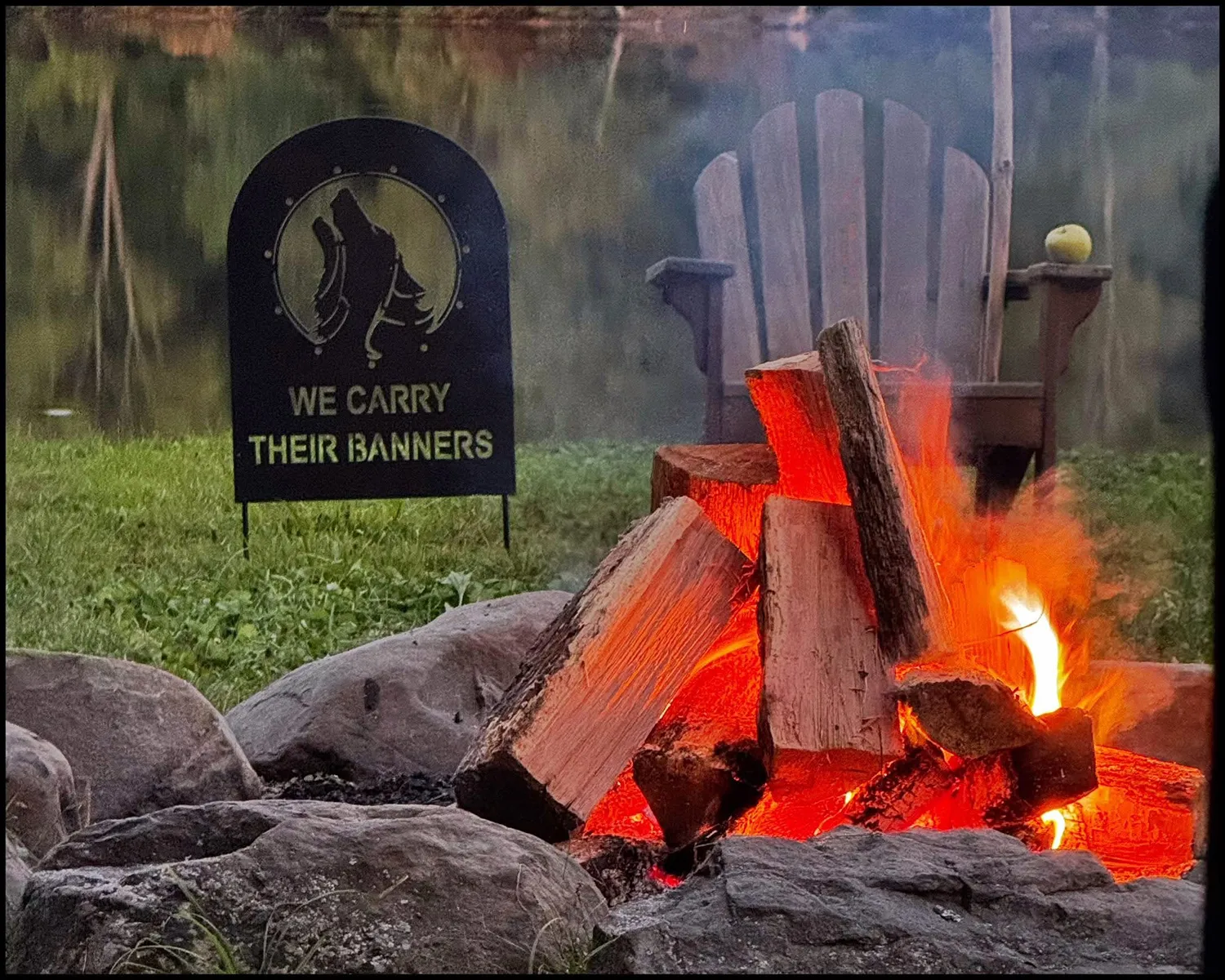
The fire of remembrance at the annual Gathering of Wolves event
I serve as chairman of the Man Up to Cancer board of directors and previously served as fundraising director for two years. In addition to conceiving the basic idea for the ODRD grant project, I assisted with recruiting participants and providing the Pitt navigation training with Thomas. I also aided in the recruitment of members of the Community Advisory Board, which provided input on the study design and interpretation of preliminary results. I have not been privy to any participant information (i.e., screening, consent, enrollment, reported data).